
Month: April 2024

Categories: Blog

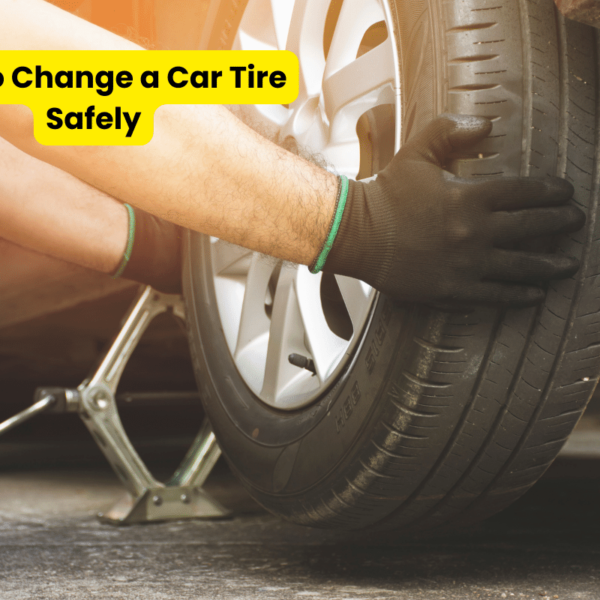
Few skills are really important for you as a driver knowing how to change a tire whether you are facing a sudden flat on a deserted road or helping a stranded friend the ability to swap out a tire can be really life saving for you. So changing your tyre includes several steps from preparing your vehicle and tools to safely lifting and replacing the tire. You need to understand every step for a smooth and successful tyre change

Preparations and Safety Measures

Before attempting to change your tire you need to gather essential tools like spare tire Jack and wheel chocks. When you have these items readily available you can streamline the process easily. Safety should always be your top priority whenever you are changing your tyre roadside. You need to park in a safe location away from traffic, engage the parking brake and use hazard lights to alert other drivers for some emergency.

Finding a Safe Location

You must choose a flat stable surface to change your tire away from the curves or inclines. It is very important for you to avoid soft ground which can compromise stability. You have to position the vehicle where it is easily visible to other drivers especially at night and you can use hazard lights and reflective triangles if important.

Engaging Parking Brake and Emergency Hazard Lights

You must engage the parking brake to prevent the vehicles from rolling while changing your tire. If additional security is needed you can use wheel chocks. If your vehicle is experiencing an issue you need to activate emergency hazard lights to signal other drivers. This will alert them to proceed with caution and also give you better visibility on the roadside.

Removing the Spare Tire and Tools

You can familiarize yourself with the location of the spare tire and Jack in your vehicle. These are especially stored in the trunk or underneath the vehicle. You must ensure that you have all the important tools including a lug wrench to remove the lug nuts and wheel chocks to prevent any vehicle from rolling.

Loosening the Lug Nuts

Before you lift the vehicle you need to use the lug wrench to loosen the lug nuts on the flat tire. You must do this while the tire is still on the ground to prevent any spinning. You need to apply steady pressure and consider using a breaker bar or impact wrench if important.

Positioning the Jack

To locate the designated Jack point you need to consult your vehicle’s manual and typically it is located along the frame or undercarriage of your vehicle. You can position the Jack under the designated Jack point ensuring it makes secure contact with the vehicle’s frame or undercarriage.

Lifting the Vehicle

You need to gradually raise the vehicle using the Jack until the flat tire is completely off the ground. It is vital for you to avoid overextending the drive or place any body parts under the vehicle during lifting before you proceed with the tire change you need to check the vehicle is stable and secure.

Removing the Flat Tire

When the vehicle is lifted you need to remove the loosened lug nuts completely and set them aside in a safe location for later use. You can grip the flat tire firmly and carefully pull it off the wheel hub taking care not to damage the lug studs or even surrounding components

Installing the Spare Tire

You need to position the spare tire on the wheel hub aligning the lug studs with the corresponding holes in the trim. You need to know that the hand threaded lug nuts onto the lug start to secure the spare tip in your place. It is very important for you to ensure that they are tightened evenly and securely.

Tightening the Lug Nuts

You need to begin tightening the lug nuts by hand in a star or crisscross pattern to ensure even pressure distribution is there. Once all the lug nuts are hand tightened you need to use the lug wrench to completely tighten them in the same star pattern. You must apply firm pressure but avoid over torquing

So above all you must know that mastering the tire changing process is a valuable skill for any driver offering you a piece of mind and security in the event of any roadside emergency. By following all the tips here you can confidently tackle flat tires and get back on the road with minimum stress.

Categories: Blog

Whenever you think about vehicle performance factors like engine power and aerodynamics often come to your mind but one of the most important factors that you might ignore is wheel weight. The weight of your vehicle’s wheels might be insignificant as compared to the engine or body but it plays a very important role in performance and safety.  Understanding the weight of the wheel is very important for both everyday drivers and vehicle enthusiasts. It impacts different aspects of your driving like wear and tear fuel efficiency and handling

What is wheel weight?

Wheel weight is all about the total mass of your vehicle’s wheels including the rim tyre and any additional components like balance weights. It is basically measured in kilograms or pounds and can vary greatly depending on different factors like wheel size material and design. Several factors contribute towards the overall weight of your bill including the tire construction and any other factors. Every component add its own mass collectively influencing your total weight

Why wheel weight matters

Wheel weight directly impacts the dynamics of your vehicle like acceleration braking and ability full if your vehicle is heavy it might require more energy to accelerate and accelerate impacting both performance and efficiency. The distribution of the weight across the wheels plays a very important role in handling the performance

Factors affecting wheel weight

The choice of the material for your wheel rim including steel aluminum or carbon filler impacts the weight of the wheel. You need to know that the aluminum alloys are commonly used for their lightweight properties while the steel rims tend to be heavier but offer durability and cost effectiveness.  The size and width of your wheel also influence its weight so larger wheels might way more than just the smaller ones.

Effects of wheel weight on handling

Unsprung weight which includes the weight of your wheels, tires and suspension components directly connected to them has a major impact on handling. So excessive unsprung weight can degrade your ride quality and responsiveness it compromises overall performance. So balancing wheel weight is very important to reduce vibrations and promote stability during driving

Ride quality and comfort

The weight of your wheel influences its ability to absorb the road imperfections and dampen the vibrations so heavier wheels might transmit more rd. Noise and harness to the cabin compromising your ride comfort especially on the rough or uneven surfaces. Effective wheel balancing mitigates vibrations caused due to uneven weight distribution ensuring a seamless and a more comfortable driving experience.

Fuel efficiency

The weight of your vehicle’s wheels basically impacts its fuel efficiency as heavier wheels require a lot more energy to accelerate and even maintain speed. By reducing rotational mass through lightweight wheel options you can improve your fuel economy. So choosing lightweight wheel options like forged aluminum or carbon rims can greatly reduce the unsprung weight and rotational inertia.

Wheel weight and tire wear

The weight and balance of your wheel directly impacts the tire wear patterns and longevity for imbalanced wheels can cause uneven tires while leading to premature treadwear and potential safety hazards. So proper wheel balancing is very important to preserve the tire lifespan and maximize performance. By ensuring that every wheel’s weight is evenly distributed you can reduce unnecessary stress on tires and prolong the service life.

Methods for measuring wheel weight

You can use different methods to measure wheel weight effectively including specialized equipment like dynamic balancing machines and precision scales. No doubt professional balancing is recommended but you can also use diy methods like visual inspection manual balancing techniques or potential imbalances and address them instantly.

Balancing wheel weight

Wheel balancing is a very important maintenance procedure that ensures seamless and stable operation reducing vibrations and maximizing the tyre lifespan.  Properly balanced wheels ensure driving comfort and overall vehicle performance so professional wheel balancing includes mounting the wheel on a dynamic balancing machine which spins the wheel to detect any imbalances

Strategies for managing wheel weight

Going for lightweight wheel options like forged aluminum or carbon fiber rims is one of the most important strategies for managing your wheel weight. The materials offer superior strength to weight ratios reducing unsprung mass and improving your overall vehicle performance. No doubt the lightweight wheels offer plenty of benefits but they often come at a premium price you need to balance your priorities regarding reduction performance enhancement and budget constraints

So understanding the wheel weight is a very important part for maximizing the wheel performance, safety and efficiency.